
(Updated January 19, 2026))
As yet very little is known about the family relationships among the over 100 Seulings that, according to an Internet search, today still live in Germany. Obviously the prime task of the genealogist has to be to identify the connections of these various branches with the roots – do they all trace back to Alten-Buseck or are there more than one separate families with a same last name? – and with their expatriate cousins. Analysis of postal area codes suggests we may have to distinguish two major pockets, one of which (with thirteen Seulings that as yet we could not connect to the family tree) is located in Ober-Hessen, in and around Alten-Buseck. A much larger group of over seventy Seulings is situated in Oberfranken/Aschaffenburg in the north of the state of Bayern. In a relatively small area dominated by the Steigerwald, southeast of the city of Bamberg, they have settled in a large number of smaller communities. Although a family relationship with the Alten-Buseck group can not be excluded, until proven otherwise we must assume the two pockets are separate, i.e., non-related. We will keep working on it!
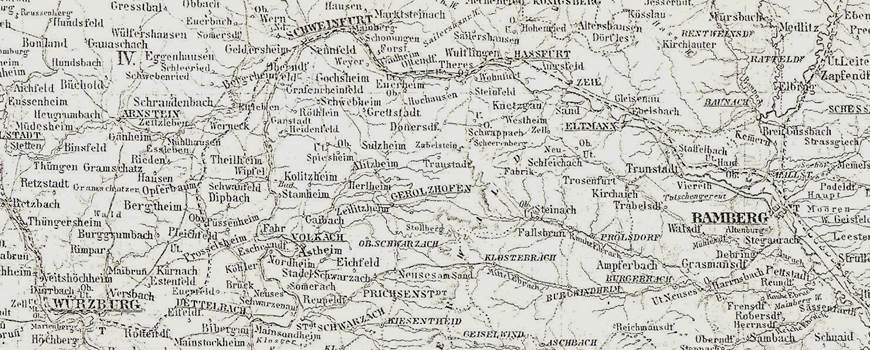
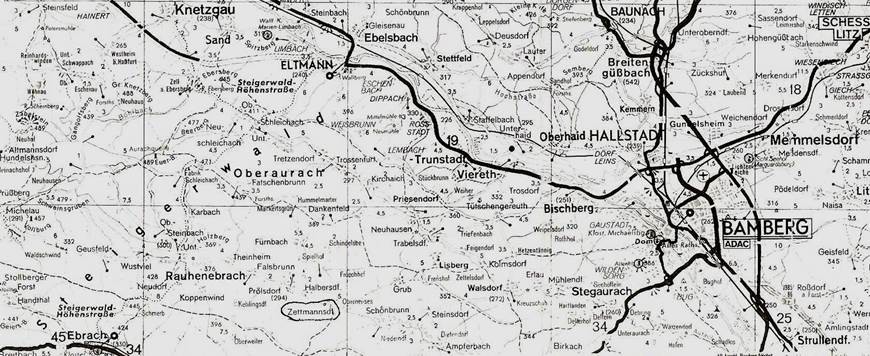
Map of the Steigerwald area in northern Bayern, west of Bamberg; 1866 and today.
Most probably the family roots in this Seuling branch can be traced to the small village of Zettmannsdorf that today, together with neighboring Grub, Halbersdorf, and Schönbrunn im Steigerwald, form the community that carry the latter’s name. With a population of less than two thousand inhabitants spread over 25 square kilometers, it has much to offer in the beauty and the quiet of the rolling hills and the diversity of woodlands and farming areas that is so characteristic of southern Germany. Still, from an economic perspective, the area had more than its share of problems. Agriculture is too small scaled, forestry not sufficiently profitable, tourism not highly developed. About two thirds of the population therefore has to commute to nearby Bamberg for making a living.
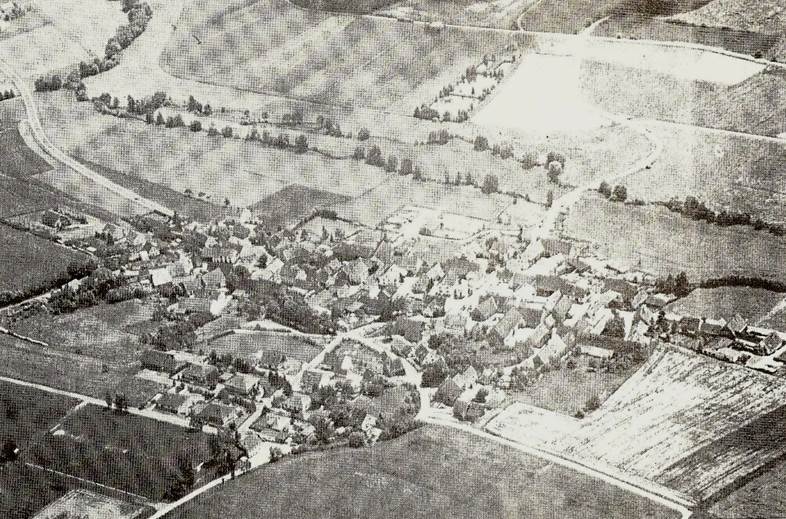
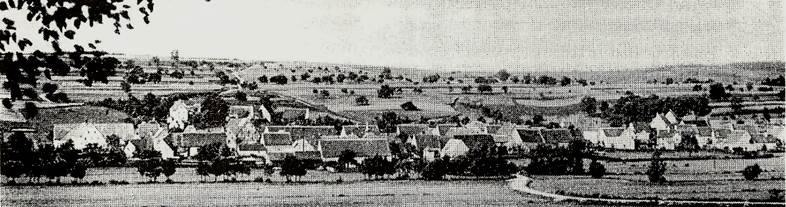
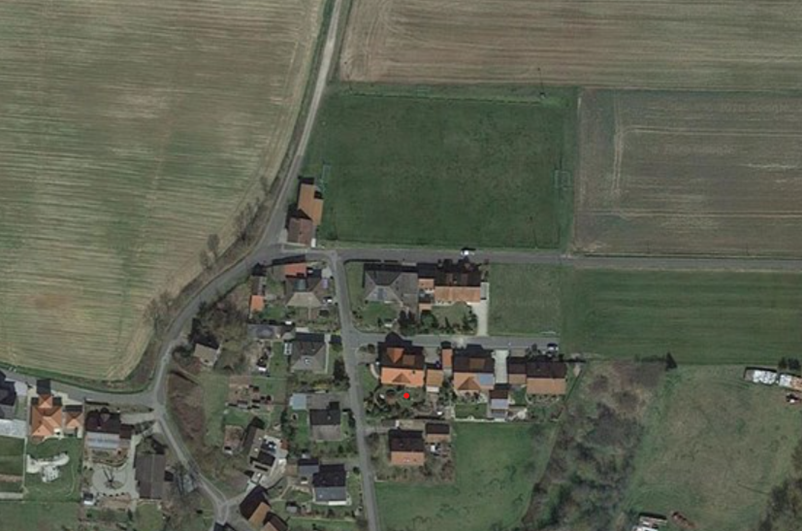
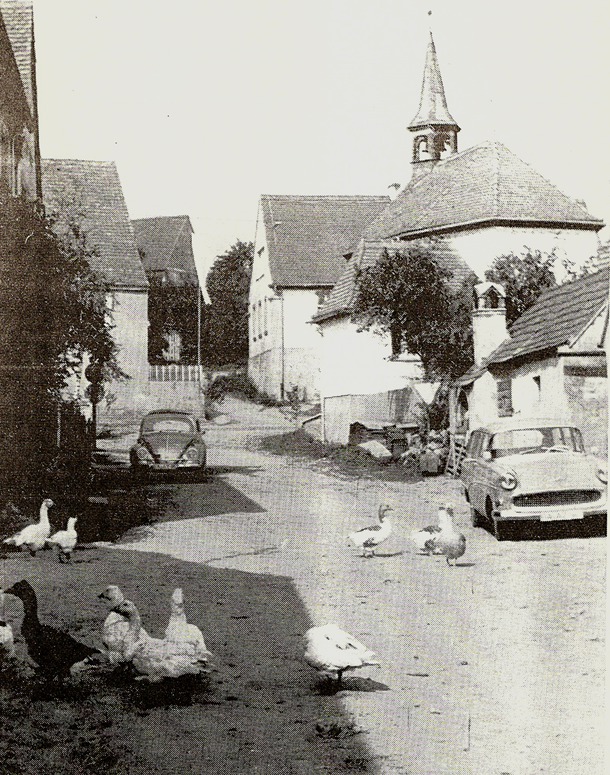
Overview of Zettmannsdorf today and a rural street scene of the recent past.
The history of Zettmannsdorf[1] goes back to around the year 500 when the Franks expanded their geographic reach from their origins in the Niederrhein: Gallia was occupied, the Thüringers and Alemannen were conquered, the Steigerwald was taken in possession and the small and scattered population was Christianized. Slavic prisoners of war, captured in the continuous battles with the Huns (Awaren), were put to work by their Frank masters in the clearing of the extensive forests. Even today many communities in the region have their roots in the Slavic settlements.
Two centuries later Karl Martell initiated a targeted development plan for “Francia Orientalis” that intended to strengthen the ties of the east Franks to the Reich. Small communities with land and forestry property were otganized in so-called Marks. The Mainbergmark – situated between the small rivers of the Rauher and Reicher Ebrach – has been of special importance for the development of Zettmannsdorf. It was built on the presence of six communities among which also Frensdorf. In the immediate vicinity larger strongholds such as Burgebrach and next generations of farming villages including Schönbrunn added to the economic growth of the region before 800.
Following a period of decline, a return to prosperity was enhanced by the institution of the Bisdom of Bamberg in 1007. As a result the deforestation was accelerated; the greater population needed more farmland. The powerful Counts of Abenberg-Frensdorf played a critical role in the development of Zettmannsdorf. “Haudegen” Rapoto von Frensdorf can be considered the founder of the community; under his “reign” in 1126 the name is first mentioned as Scitemulesdorf. The foundation of the Cisterzienser monastery in Ebrach in 1126 further accelerated the development within the region, especially after Count Rapoto sold his property to the Bishop of Würzburg who in turn passed it on to the monastery. Around 1300 the village is first called Sedmastorf.
Spread over a long period of time, the Herren von Giech gradually acquired much of the property in the surroundings of Zettmannsdorf. It thus came as no surprise when, to anchor their position, they built a castle in the center of the village that over the course of centuries determined the fate of the community. In 1514 Konrad von Giech, “Herr auf dem Rittergut Zettmannsdorf”, acquires significant land holdings in Lisberg and the prosperity of the two villages becomes intertwined. With the power of both the nobility and the church escalating, the repression of the peasants became excessive and in 1525/1526 the hatred culminated in the Bauernkrieg. The Von Giech family was hit hard when their castles in Zettmannsdorf, Zabelstein and Schönbrunn were destroyed. The monastery of Ebenbrach, at the time another symbol of oppression, also was plundered. After the collapse of the farmers’ offensive in which hundred thousand peasants lost their lives, large areas were depopulated and returned to wilderness. The brothers Johann and Konrad von Giech demanded compensation of their damages from Bamberg, apparently with success as the castle in Zettmannsdorf was rebuilt and even enlarged. Only the tower was erected on the foundations of its predecessor. In 1552 the family property was divided; Helfant von Giech receives “Zedmesdorf” with all associated rights. He had no time to relax and enjoy his new holdings, however, as immediately, during the Markgrafenkrieg (1552-1554), the village was heavily damaged. In 1575, his heirs sold out to Johann von Aschhausen who also bought all other Von Giech land in the region. In 1600 the rich Von Münster family in turn added it to their holdings. From now on Zettmannsdorf was known as “ein Ritterschaftliches Dorf des Cantons Steigerwald, gehört denen Herren von Münster”.
The Großen Religionskrieg that lasted from 1631 to 1634 brought even greater catastrophe to Franken than the Bauernkrieg. The Swedes wanted to conquer the entire Steigerwald. The population suffered from their demands with regard to food and the associated atrocities. Moreover, the pest of October 1633 took a heavy toll. The recovery in the middle of the 17th century was slow and painful; the local economy came pretty much to a standstill. Around 1800 Zettmannsdorf was characterized as: “Dorf, 4 Stunden von Bamberg, zum Ritterorte steuerbar und den Freyherrn Münster zu Lisberg gehörig. Allda befinden sich ein altes Castrum und mehrere Ökonomiegebäude.” In 1814 Zettmannsdorf counted 34 buildings, 148 inhabitants and a mill. Its main source of income appears to have been pig farming: “Die Schweinesucht wird hier stark betrieben.”
In 1854 Heinrich von Münster sold the Rittergüter Lisberg and Zettmannsdorf to the Gräfliche Standesherrschaftsrechte in Castell. The earlier rights of the nobility were abandoned and around the middle of the 19th century the farm land was bought by the local farmers.
Over the years a few new buildings were added that currently still serve as landmarks. In front of the building that in 1824 still housed the school is the so-called Schulkreuz, a rarity in the sense that the late-18th century artist carved the body of Jezus Christ and the cross out of a single stone. Towards the end of the 19th century the community also decided to build a small church. Very little is left of the castle; some remnants of the foundations can still be seen today. A map from the 19th century still provides an indication of its former location and size.
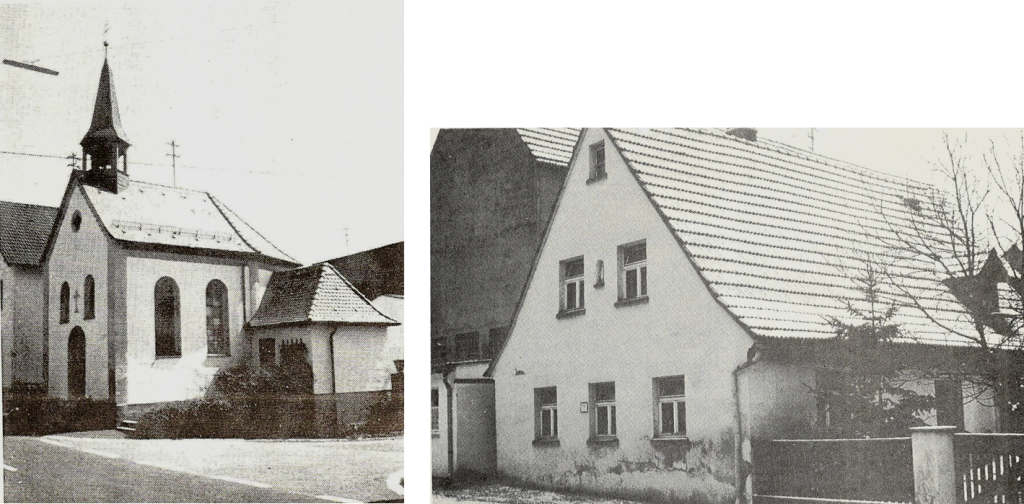
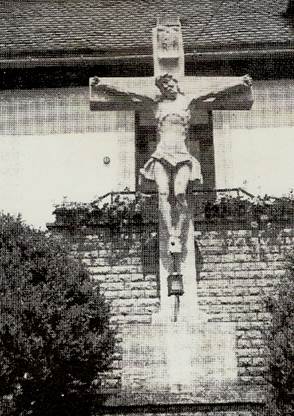
The Zettmannsdorfer Kapelle, the old school building, and the so-called Schulkreuz.
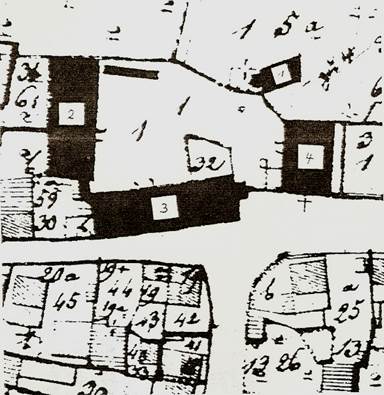
Center of Zettmannsdorf in the 19th century with its dominating castle (2 and 3) and the Amtsgebäude (4) from 1760 that later was turned into the school house plus Schulkreuz.
According to our current knowledge, the first time a Seuling is mentioned, was in mid January 1594 when during an armed raid in Gochsheim the wooden barriers that were installed, were broken down and the houses of Hans Ruracker and Hans Seuling were searched. Gochsheim is pretty far to the west of Zettmannsdorf, however, and we cannot find any other trace of Hans. We had a lucky break when German genealogists[2] posted information on Johann Seuling who in 1668 married Elisabeth Nuechter from Zettmannsdorf. Their daughter Margaretha was born in 1670 in Zettmannsdorf and possibly the couple had further offspring. They could be the source of the Seuling tribe in Zettmannsdorf.
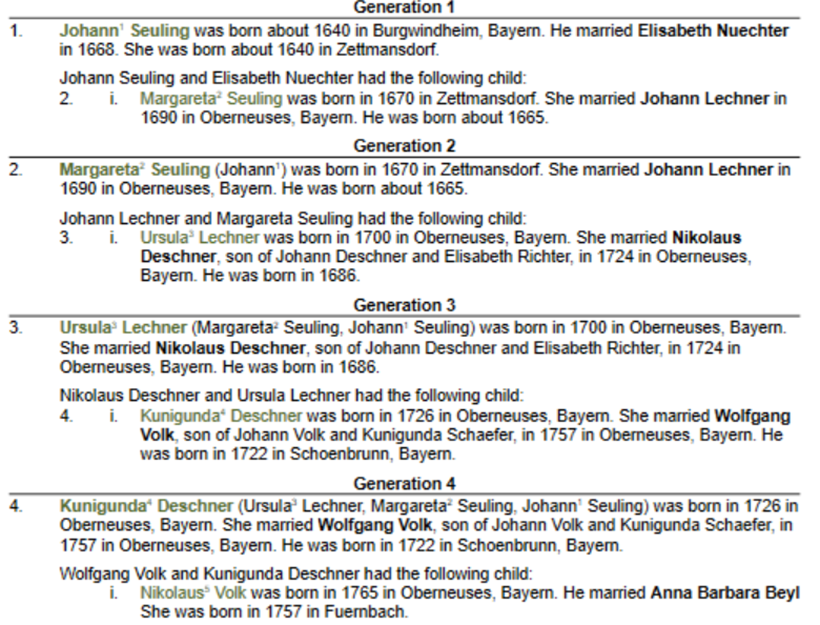
The descendants of Johann Seuling, the first reference Seuling in Zettmansdorf?
[1] The source of the historical information and photographs on Zettmannsdorf is the publication “Der Steigerwald” of October 1993, notably the article by Egbert Sauer and Georg Seemann, “Zettmannsdorf: Geschichte und Geschichten” (pages 154-167).
[2] The main source is Micha Scharf of Zettmansdorf who posted his findings on the My Heritage website.
The Bavarian archives of the mid 1800s mention a number of marriages: a Georg Seuling from Proellsdorf; it is not far from Zettmansdorf. Earlier, in section 10d.5, we learned about Peter Seuling, farmer and conscripted soldier from Steinsdorf, 22 years old, who in January 1872 was charged with desertion. Steinsdorf is just east of Zettmannsdorf. In November of that year Johann Adam Seuling, shoemaker from Zettmansdorf and again conscripted, also is named with an undefined charge. A member of the Seuling family is mentioned in official documents is in a Wahlprotokoll of 1889. The Landwirte at that time were G. Seemann and A. Frey while the gentlemen Seuling, Betz, Fröhling, and Thürstein served their community als Bevollmächtigte.


Peter Seuling is charged with desertion; Bamberg, January 22, 1972.

Johann Adam Seuling also is charged; Bamberg, November 24, 1872.
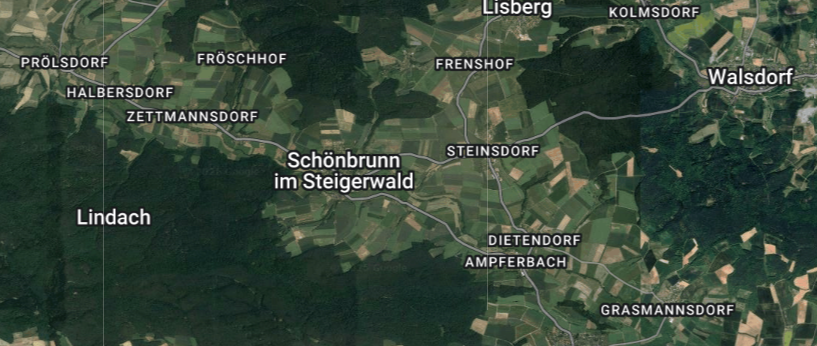
Villages in the vicinity of Zettmansdorf.
There also is a pleasant surprise when Johann Seuling, born June 13, 1878 in Zettmansdorf, arrived in Amsterdam on February 14, 1896. His job description says “Brouwer HB” and his address is listed as Stadhouderskade nr 78/79, i.e., the Heineken brewery. He left in the course of 1897 for Dortmund of Frankfort in Germany; he clearly was travelling to learn the brewery trade.

Johann Seuling does an internship at Heineken in Amsterdam; 1896.
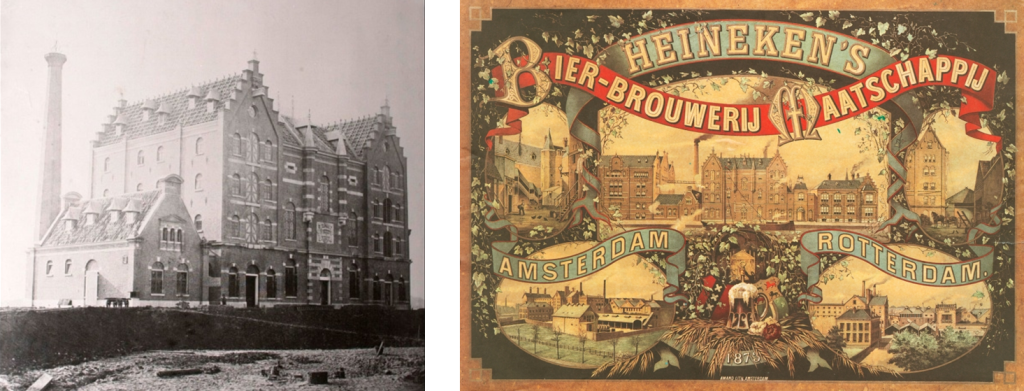
The new Heineken Brewery from 1868 and a later postcard.
Although genealogical research still must substantiate our hypotheses, it would seem that during this period the Seulings spread from Zettmannsdorf to the neighboring villages. Prominent probably was Schönbrunn, with a history that closely parallels that described before. First mentioned in 1278, passed on from one noble family to the next or occasionally to the church, heavily damaged in the Thirty Year War (1618-1648), notably in 1630 when the Swedes invaded Franken. In 1656 the village was almost depopulated. There were further prices to pay during the Schlesian Wars and when Napoleon returned with his crippled army from Russia in 1812. Again there was a castle, the traces of which can hardly be found today: was it located near the present Pfarrkirche or – as oral history tells it – was it built on the property of the Schloßbauer that currently is owned by Seuling? In the latter case we would have a first member of the Family who at least lived on the site of a castle; sometimes one has to celebrate even small events.
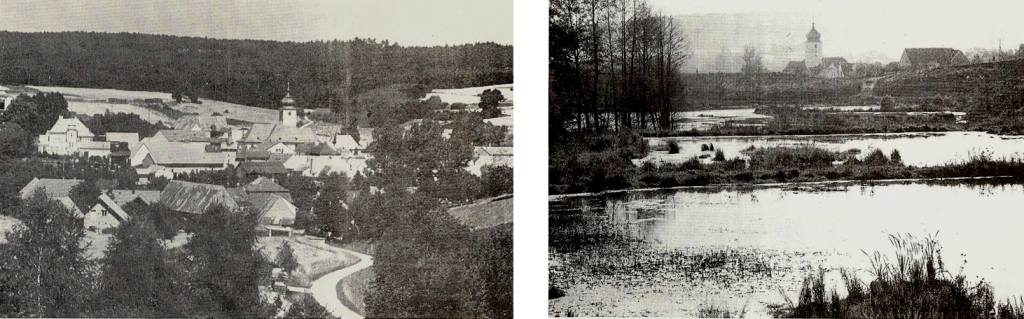
Overview of Schönbrunn and of the water reservoir/nature conservation in the Gruber Bach. The reservoir was built after the floods of 1971 and 1980 to “store” the overflow of the Gruber Bach in periods of heavy rain.
With the greatly appreciated help of Bernhard Seuling[1] we received a genealogical lead that makes it possible to gain a first insight in the Bavarian Seuling branch. A so-called ancestor table put together by his father Otto (1906 Bamberg – 1963 Bamberg) suggests the roots of this branch to reside in Bavaria, at least going back to the middle of the 18th century, and moreover an adherence to the Catholic religion. This religious affiliation also is borne out by the wonderful family picture from around 1930 where Otto’s sister Meta is a proud nun standing between her happy parents. Father Franz Seuling (1868 Bamberg – 1955) had four children: Franz, Josef, Meta and Otto. As yet we only have further information regarding Otto who had seven children, Karl, Elisabeth, Günther, Georg, Rainer, Erwin and Bernhard (youngest).
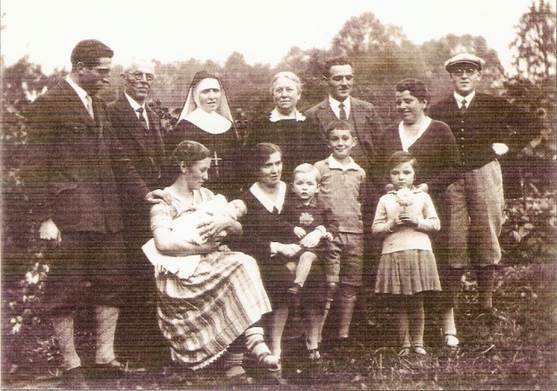
Family picture of the Bamberg branch of Seulings, around 1930. From left to right standing son Otto, father Franz, daughter Meta, son Franz and son Josef. The names of the spouses and children are unknown as yet.
Otto Seuling had seven children, Karl, Elisabeth, Günther, Georg, Rainer, Erwin and Bernhard (youngest).
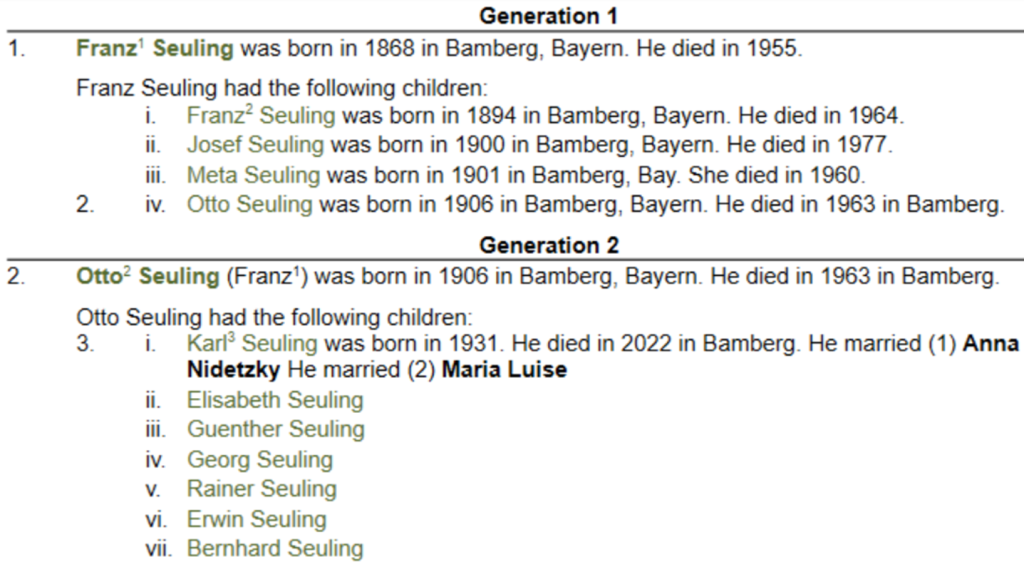
Offspring of Franz Seuling (1868 – 1955).
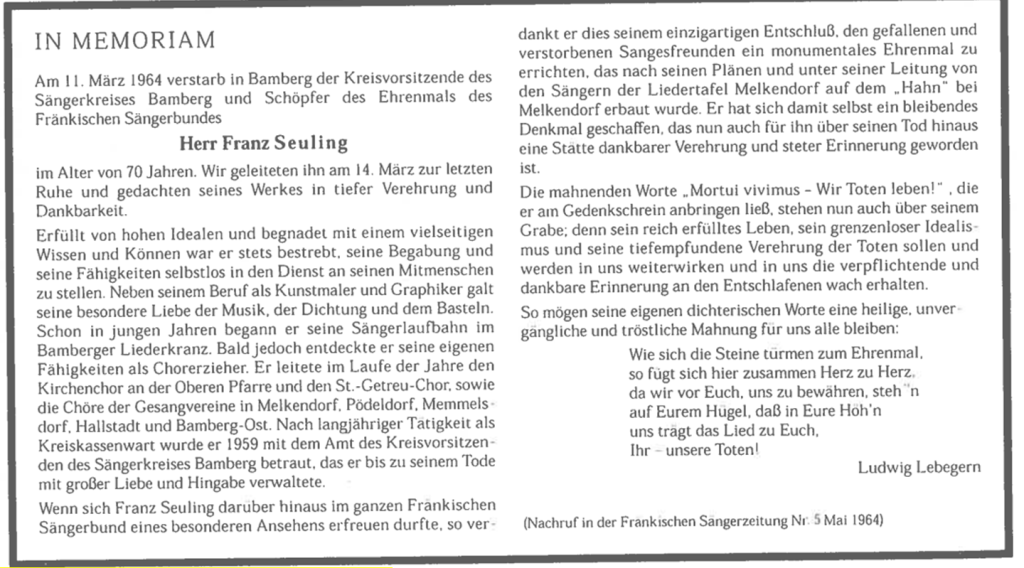
Franz Seuling (abt. 1894 – 1964).
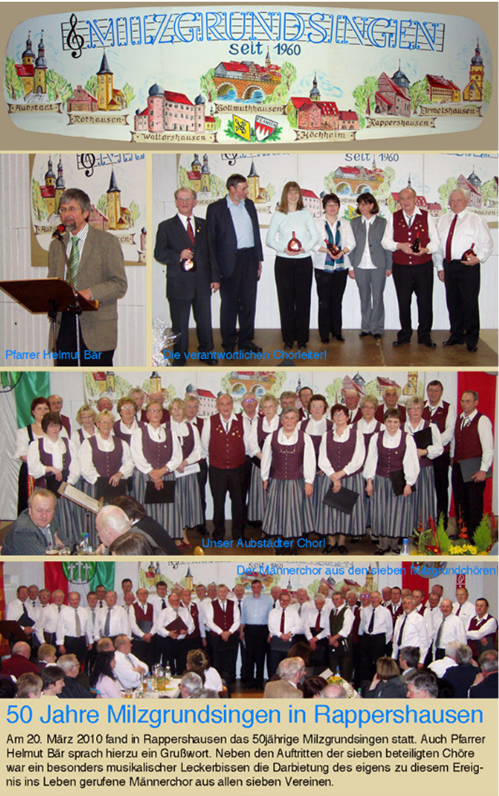
Choirs directed by Franz Seuling of the singing club “1897 Eintracht Aubstadt”.
With help from granddaughter Paulina we can retrace part of the family. Karl was a state employee in customs so he would move a lot in his career and be away from his family. He was married to Anna Nidetzky who died quite young. They again had 3 children: Peter (lawyer), Herbert (accountant), Christine (medical researcher in a lab).
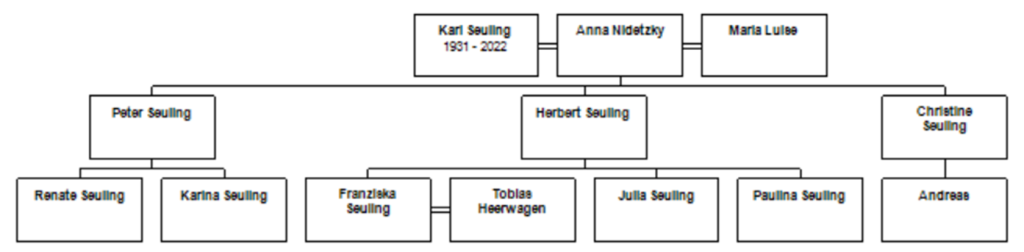
Offspring of Karl Seuling (1931 – 2022).
Peter (deceased quite young as well) had 2 girls: Renate (personal stylist) and Karina (unsure).
Herbert has 3 girls: Franziska (restaurant owner), Julia (chef) and Paulina (designer)
Christine has 1 boy: Andreas (surgeon). They all were born and raised in Bamberg (some moved to Kulmbach and Nürnberg Area, which is still quite close).

Herbert Seuling
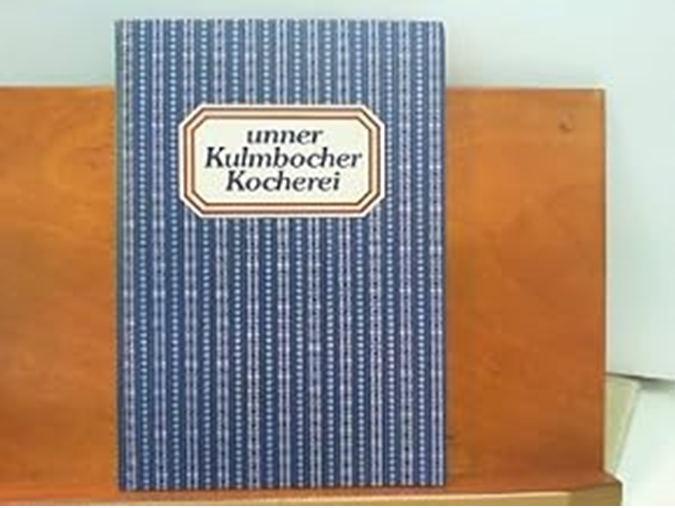
Regional recipe book by Wolfgang Protzner, Gabriele Seuling anf Hans Stösslein: “unner Kulmbocher Kocherei – a wenig krefdich, defiir prch guud und aa gsund!”; 1987.
Franziska married Tobias Heerwagen and opened a lovely restaurant Zuckerstück in Bamberg. In a fun interview in May 2016 she answered the question: ist das möglich…?“Ja, wie jetzt… wir reden doch von einem Café, oder?“, will ich wissen. “Geh hin, lass dich überraschen!“, schmunzelt mein Neffe. Dort soll es portugiesische Kaffee-Spezialitäten, Natas – das sind kleine Sahnetörtchen, selbstgebackene Kuchen, Quiches, Antiquitäten, moderne Wohnaccessoires und wunderschöne Geschenkideen geben. Also, ich traue mich kaum es offen zu sagen. Aber, wenn wir mit Gästen in Bamberg unterwegs sind, dann immer in dieser Reihenfolge: Schlenkerla, Katzenberg, Dom…. fertig. Die Obere Sandstraße hatte ich überhaupt gar nicht auf dem Plan. Bis letzte Woche. Da hat mein Neffe bei unserer traditionellen Sonntagsmittagstour von diesem süßen kleinen Café dort erzählt. “Zuckerstück“. Allein der Name macht mich schon neugierig.
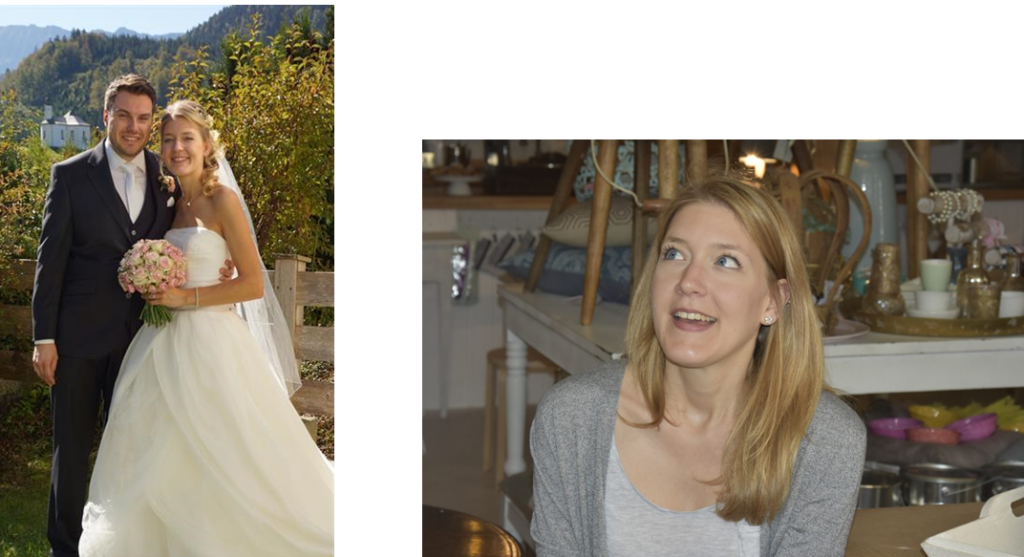
Franziska Seuling and Tobias Heerwagen, married September 27, 2014 in Achenkirch, Tirol.
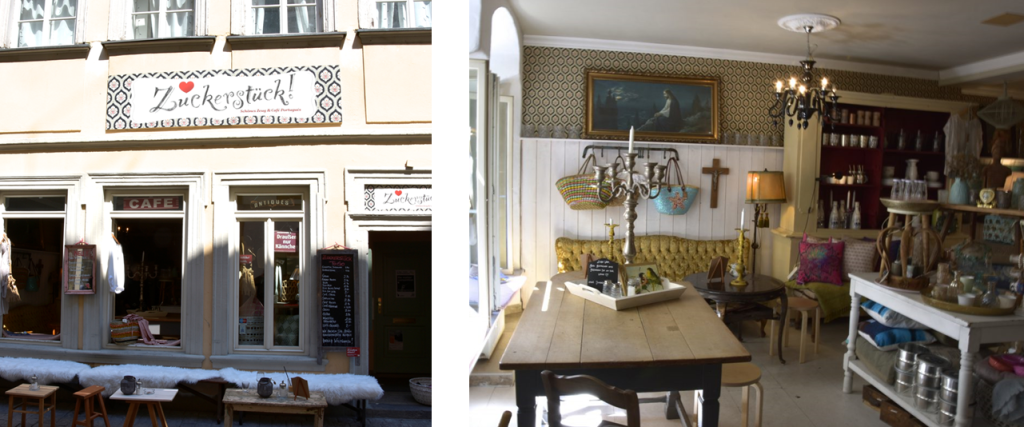
Restaurant Zuckerstück in Bamberg[2].
Mal ehrlich, da hat mein Neffe doch glatt untertrieben. Mit meinem Liebsten stehe ich vor dem “Zuckerstück“. Also, mir geht es ja so, wenn ich etwas richtig gut finde, ist es, als würde mein Herz gleich überfließen. Genau das passiert gerade. Magie. Kleine Tische im Ladencafé, liebevoll dekoriert, laden zum Verweilen ein. Gefällt dir das Tischchen, auf dem dein Cappuccino in einer Sammeltasse dampft, oder der Stuhl auf dem du sitzt? – Nicht lange fackeln, du kannst es kaufen. Ja, echt! Einzig die Sammeltassen. Die gehören zu den ganz wenigen Dingen, die unverkäuflich sind. Die Mischung aus alt und modern, hell und dunkel, traditionell und verrückt, die macht das Cafè zu einer einzigartigen Kulisse. Unglaublich. Es fühlt sich an, wie in einer anderen Welt.
Wenn Du Deinen Mann dabei hast, kein Problem… Er wird bestimmt nicht die Augen verdrehen, wenn du in die Kleiderecke rennst, um ein Kleid oder eine Bluse anzuprobieren. Er kann herrlich entspannt seinen Cappuccino schlürfen und sich in die neuesten Posts auf seinem Handy vertiefen. So jedenfalls hat es mein Liebster gemacht. Und ja, richtig. Es gibt eine klitzekleine, aber feine Auswahl an Klamotten. Na klar – die passenden Accessoires wie Tasche oder Schmuck findest du hier auch.
The enthusiastic interviewer was surprised by the Portuguese “Kaffee- und Esskultur” in the restaurant. “Entschuldigung, was haben sie eigentlich mit Portugal zu tun?”, frage ich Franziska Heerwagen. Sie führt nämlich gemeinsam mit ihrer Mutter das schnuckelige Café. Die symphatische junge Frau mit den langen blonden Haaren muss laut lachen: “Gar nichts. Ich bin eine gebürtige Fränkin aus der Nähe von Bayreuth. Meine Großeltern sind die Verbindung. Sie haben ein Ferienhaus an der Algarve. Die ganze Familie liebt und genießt die portugiesische Küche. Die Leidenschaft für die Spezialitäten des Landes haben uns schließlich inspiriert, besondere Leckereien wie die Natas oder den Galao – der portugiesische Milchkaffee, der sehr heiß im Glas serviert wird – in unserem Ladencafé in Bamberg anzubieten.“
“Das unterscheidet uns von anderen Cafés“, strahlt die studierte Betriebswirtin stolz, “unsere portugiesischen Spezialitäten – allesamt selbst zubereitet. Und Leidenschaft, für das, was wir tun.“ Sieben Tage die Woche sind Mutter und Tochter für ihre Kunden da. Das Privatleben kommt dabei sicherlich etwas kurz. “Dennoch, ich genieße jeden Tag“, verkündet Franziska Heerwagen fröhlich. She is living her dream. The interviewer and her partner learned their lesson: “Mit unseren Gästen biegen wir nie wieder Richtung Dom ab, ohne vorher einen Abstecher ins Zuckerstück gemacht zu haben.”
Eines wissen mein Liebster und ich jetzt ganz sicher: Mit unseren Gästen biegen wir nie wieder Richtung Dom ab, ohne vorher einen Abstecher ins Zuckerstück gemacht zu haben.
Between 2012 and 2015, sister Julia studied to be a chef in the kitchen of Schloss Burgellern, according to her “Die Beste Ausbildung die ich mir hätte wünschen können. Mit den, in der Küche vom Schloss Burgellern erlernten Fähigkeiten hatte ich mehr als eine Grundlage für meine weitere Karriere und nun die Chance in einem Sternerestaurant weitere Erfahrungen zu sammeln.”The hotel Burgellern is situated in the middle of a picturesque landscape park in the district of Bamberg, at the gateway to Franconian Switzerland, the ideal place for unforgettable holidays or a relaxing short break. Since 2017 she runs her own restaurant.

Julia Seuling
Third sister, and our correspondent, Paulina moved to Portugal where she is currently residing and enjoying the sun.
We are not 100 % certain, but possibly Günter Seuling who passed away in 2020 is one of the seven descendants of Otto Seuling.
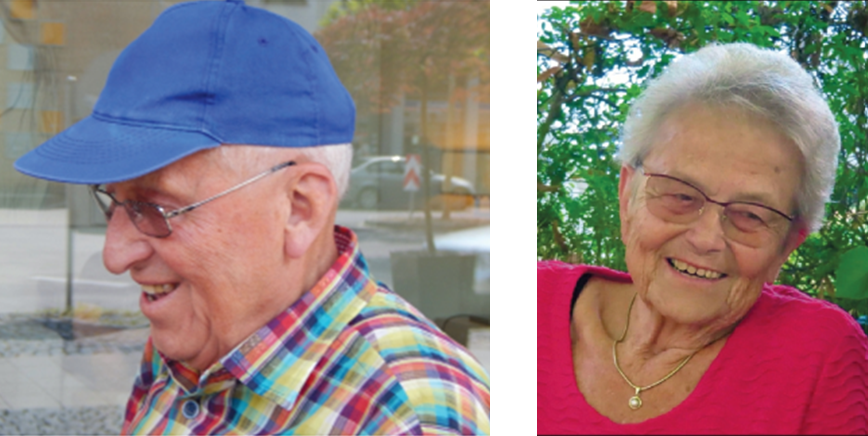
Günter Seuling Helga Seuling – Barkow (1939 – 2025).
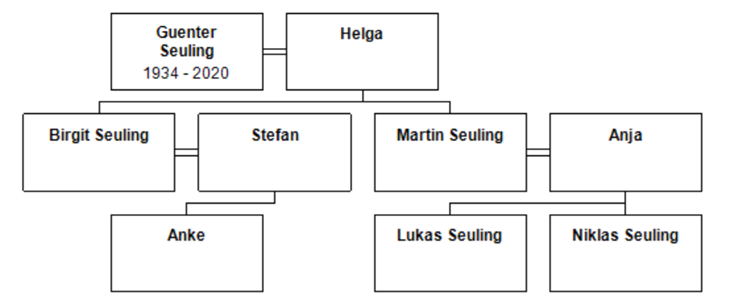
Possible off-spring of Günter Seuling (1934 – 2020).
We are hoping for a genealogical breakthrough through a direct contact with members of the current Bavarian Seuling tribe. Recently we encountered first information on a mini-branch in Zettmannsdorf. With some luck perhaps other genealogists also can add insight into the connection with the older Seulings as well as with one or more American mini-branches.
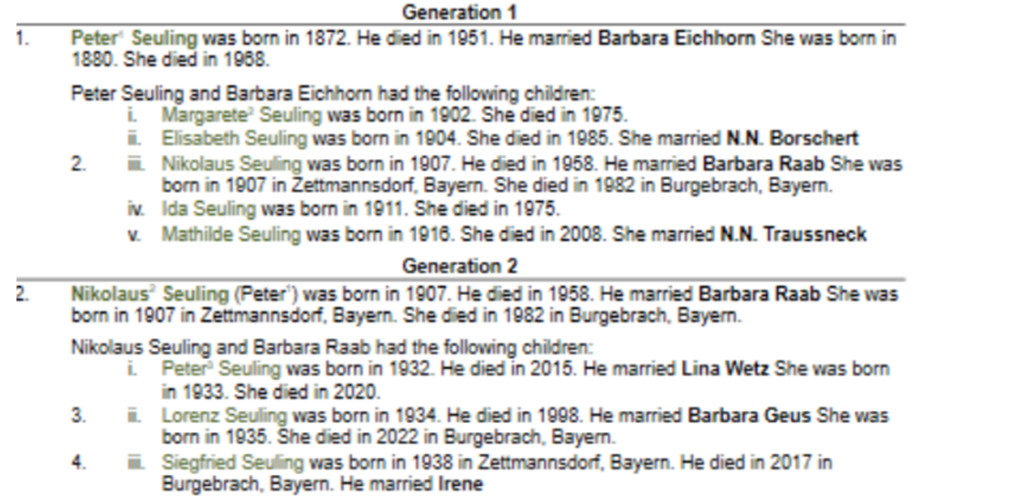
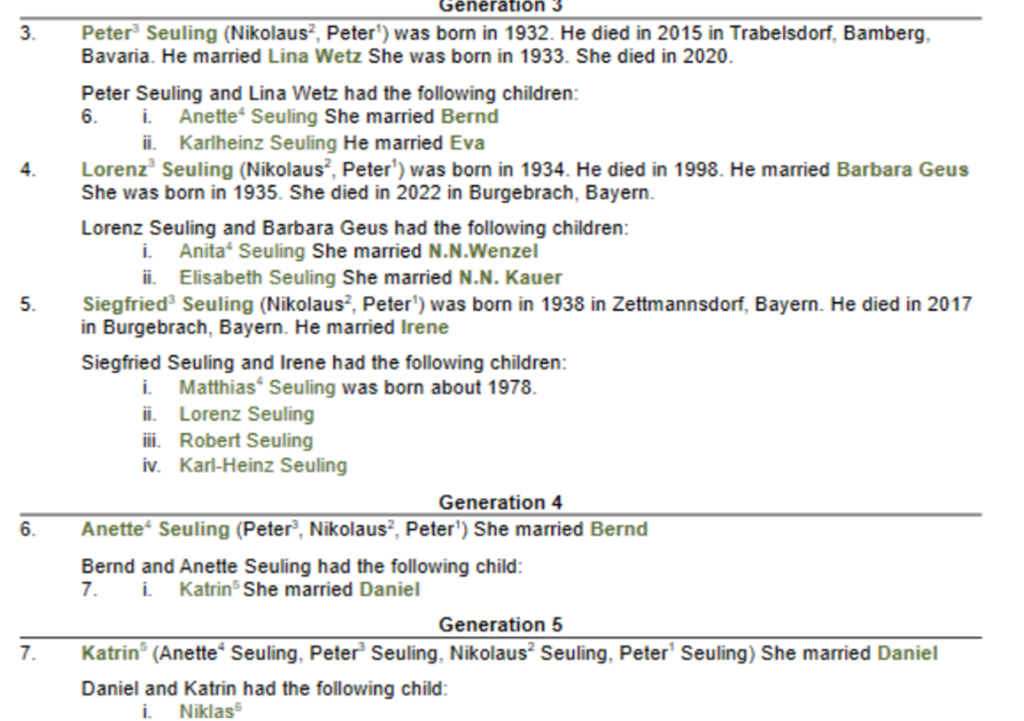
Bavarian descendants of Peter Seuling (1872-1951).
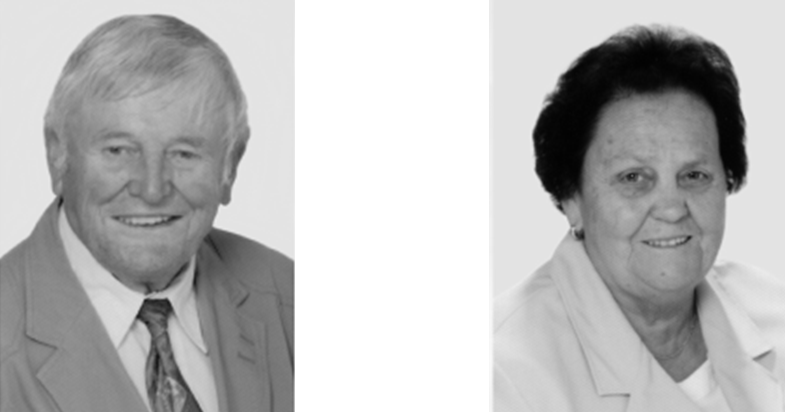
Peter Seuling (1932 – 2015) Katharina (Lina) Wetz (1933 – 2020)
[2] Zuckerstück. Obere Sandstraße 4, 96049 Bamberg, telefon: 0951 18504020; mail: info@zuckerstueck.net.
The Seulings remain omnipresent in Zettmansdorf, indeed. Almost certainly a Seuling poses with the choir “Liederkranz”. But even more recently they are very much a part of the community. In 2007 Georg Seuling was Bierkönig in Burgebach, Petra Seuling beat him as she was Weinkönigin in 2002, 2008 and 2010. Stefanie Seuling was Vizekönigin and Lisa was Jugendvizekönigin at the traditional Königsproklamation of the Schützenverein “Hofer Zettmansdorf” in 2013; moreover, Katrin and Matthias won prizes. Willi Seuling was Fischerkönig 2016/2017 in Schönbrunn, catching a carp of 2565 gram. August Seuling was honored for his active service in the Freiwilligen Feuerwehr, of which Matthias is the chairman. And of course there’s the Stammtisch Frankenschluckies, a fun group headed by no less than three Seulings that makes you want to move to Zettmansdorf.
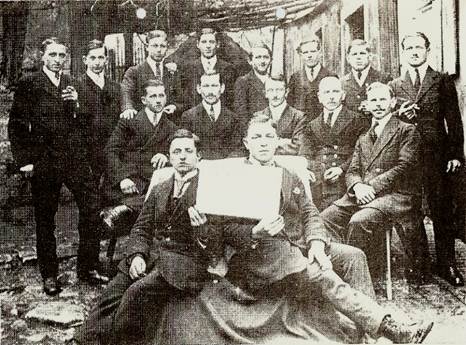
The choir “Liederkranz” that existed in Zettmannsdorf between the two World Wars.
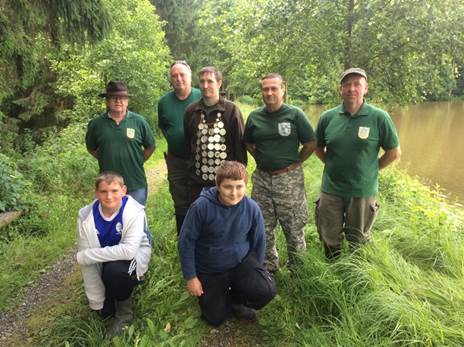
Willi Seuling, heavily decorated as Fischerkönig 2016/2017 of the Sportfischerverein Schoenbrunn.
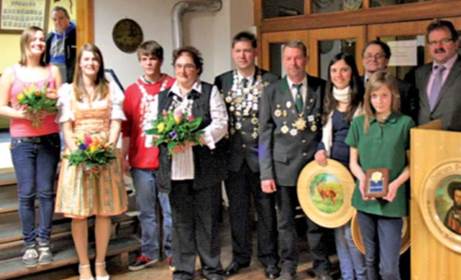
Award winners at the Königsproklamation of the Schützenverein “Hofer Zettmansdorf”; April 2013. Far left Lisa and Stefanie Seuling; second from the right, next to Bürgermeister Georg Hollet, August and in front of him Katrin.
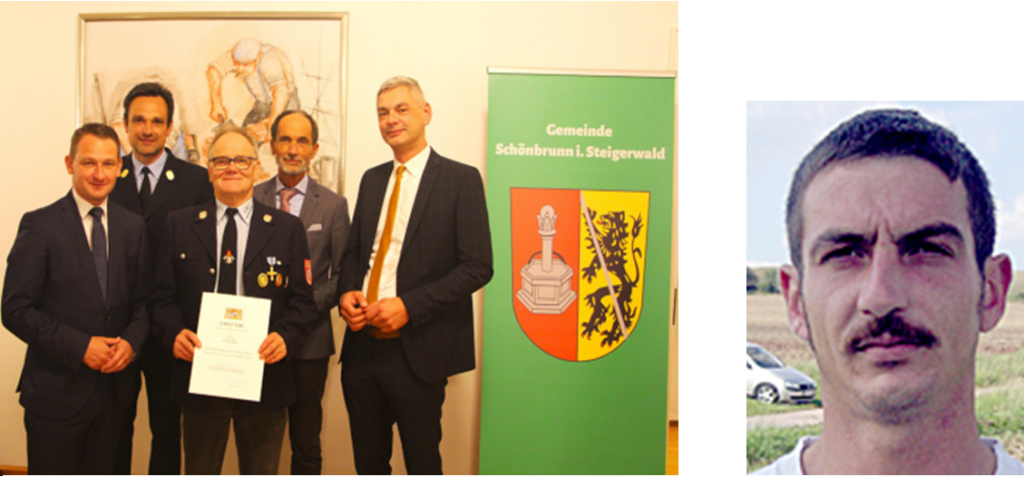
August Seuling is honored for his 40 years active service with the Freiwilligen Feuerwehr Zettmannsdorf; 2024. Matthias Seuling (right) is its chairman.
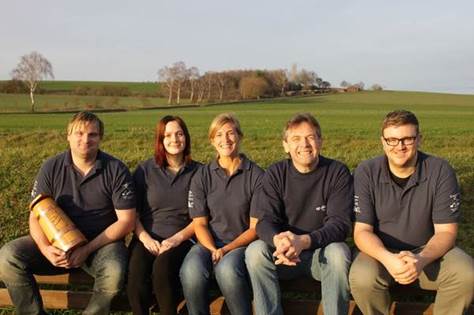
The Vorstand of the Stammtisch Frankenschluckies in Zettmannsdorf headed by three Seulings: at the left chairman Christoph, next to him treasurer Lisa and to the far right 2nd chairman Thomas.
The internet provides ample information on a whole pack of highly promising Seulings living nearby: researchers, business people, sporters, enthusiastic entrepreneurs… The potential for family relationships, also across the Ocean, is enormous.
Loose American ends looking for a connection in Bayern
It is obvious that too many American Seulings as discussed in section 10d are missing out on a warm family connection. To facilitate the search for connections at the Bavarian side we have summarized the best “leads” at the American side.
- 10d.1 The American branch started by Nicholas Seuling (1875-1932)
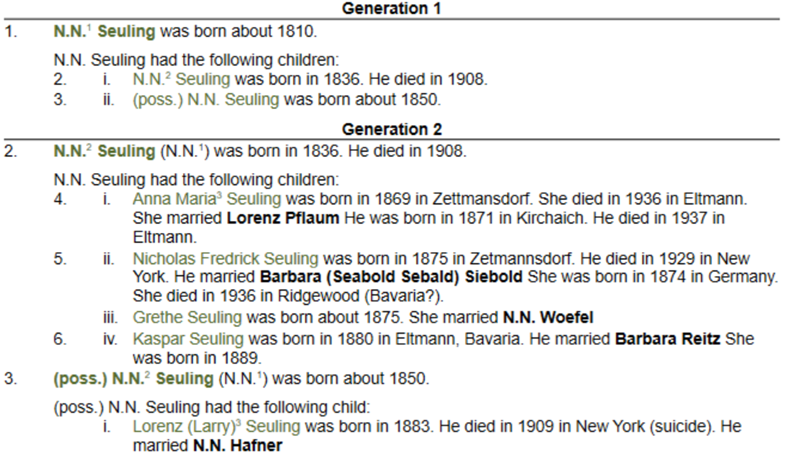
- 10d.3 The Ohio branch headed by John Seuling (1852-1913)
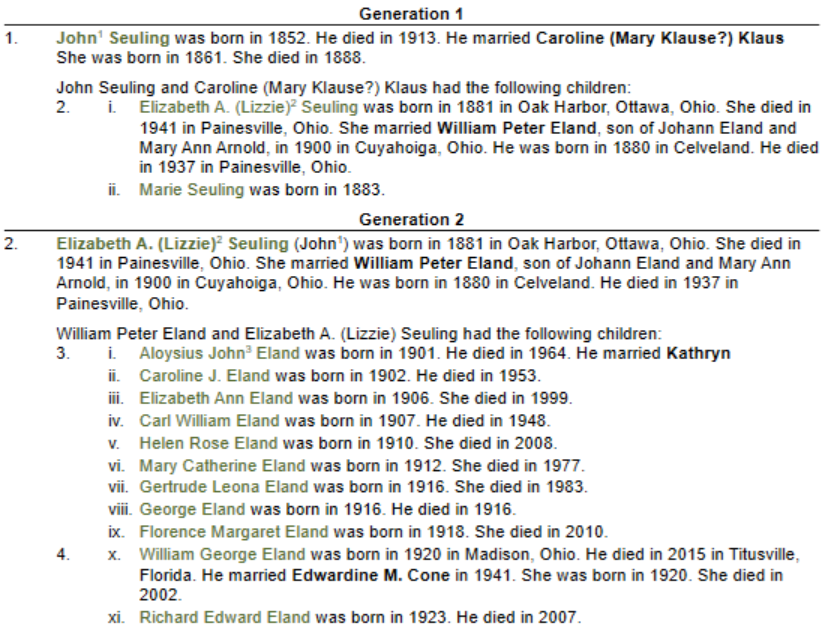
- 10d.4 The Cleveland branch headed by John Seuling (1853-1913)
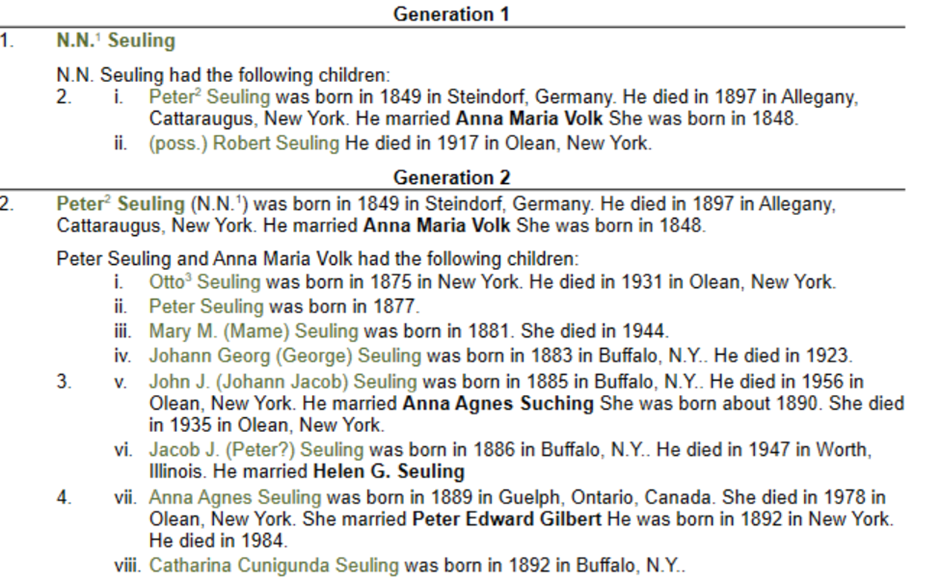
- 10d.5 The Buffalo/Olean branch headed by Peter Seuling
- Luise Seuling, age 29 from Arnswalde arrived at Ellis Island in 1931 aboard the Deutschland. She is accompanied by her 3-year old daughter Edith, who was born in Brooklyn, however. Could she be the spouse of Johannes Seuling, age 20, from Zettmansdorf who immigrated in 1922?
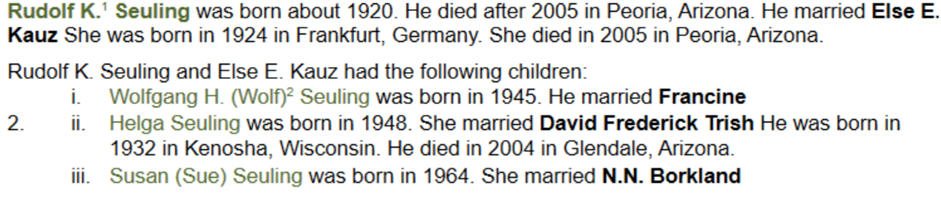
- Rudolf K. Seuling (abt 1920 – aft 2005).
- Johann Andreas Seuling emigrated in 1767 with the ship “Sally” from Rotterdam by way of Cowes to Philadelphia. A Johann Andreas Seuling is also found in Pennsylvania.
- Horace Seuling is registered in the New York Marriage Index 1630-1639.
- Bernhardt Seuling (died 1919) and Barbara Popp in 1892 in Muenchen had daughter Anna B. Seuling who died in 1953 in Syracuse, New York. She married Carl Carlson born in 1867 in Sweden and a second time with Robert Riddiough.
A number of Seulings who arrived in the U.S.A. around 1900 or where born around that time, still deserve further investigation: is there a Bavarian connection?
- Anna (1895-1990)
- Christine (1907-1993 Suffolk, NY)
- Louise (1902-1981 Flushing, NY)
- Mary (1912-1974).
Arrivals at Ellis Island:
- Lorenz Seuling, age 27, from Zettmansdorf arrived in 1904.
- Carl, age 24, arrived in 1890.
- John, age 47, arrived in 1949 aboard the Veendam.
- Wilhelm C.F., age 30, arrived in 1896
- Margareth, age 16, from New York arrived in 1926 aboard the Berengaria.
- Maria, age 17, arrived in 1925 aboard the Westphalia.
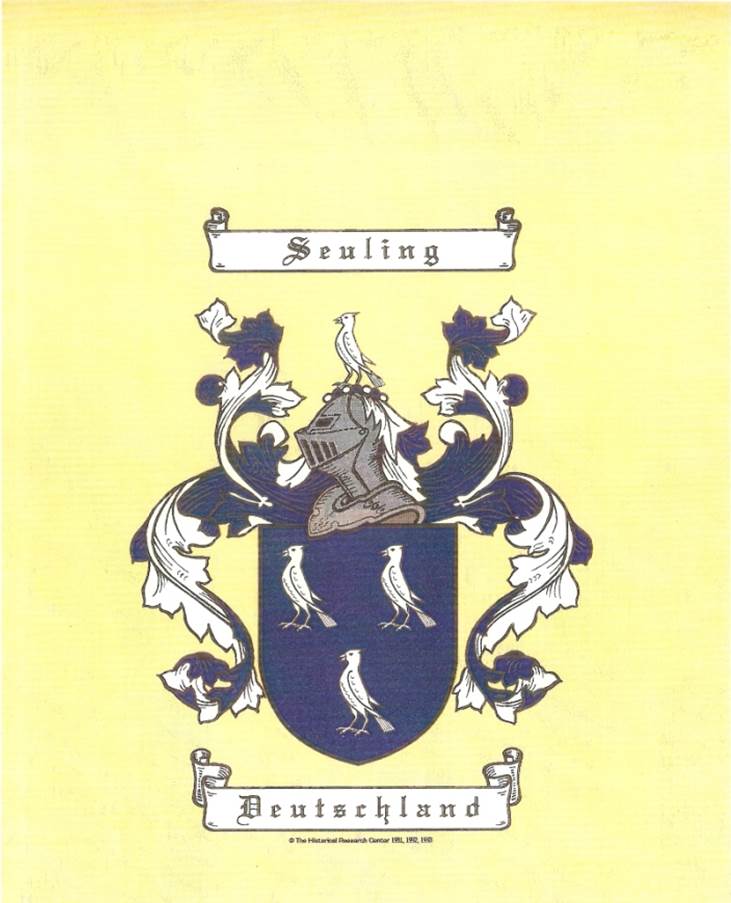
The unlikely family crest of the Seuling tribe, according to The Historical Research Center, that a member of the Bavarian Seulings acquired during an American holiday.